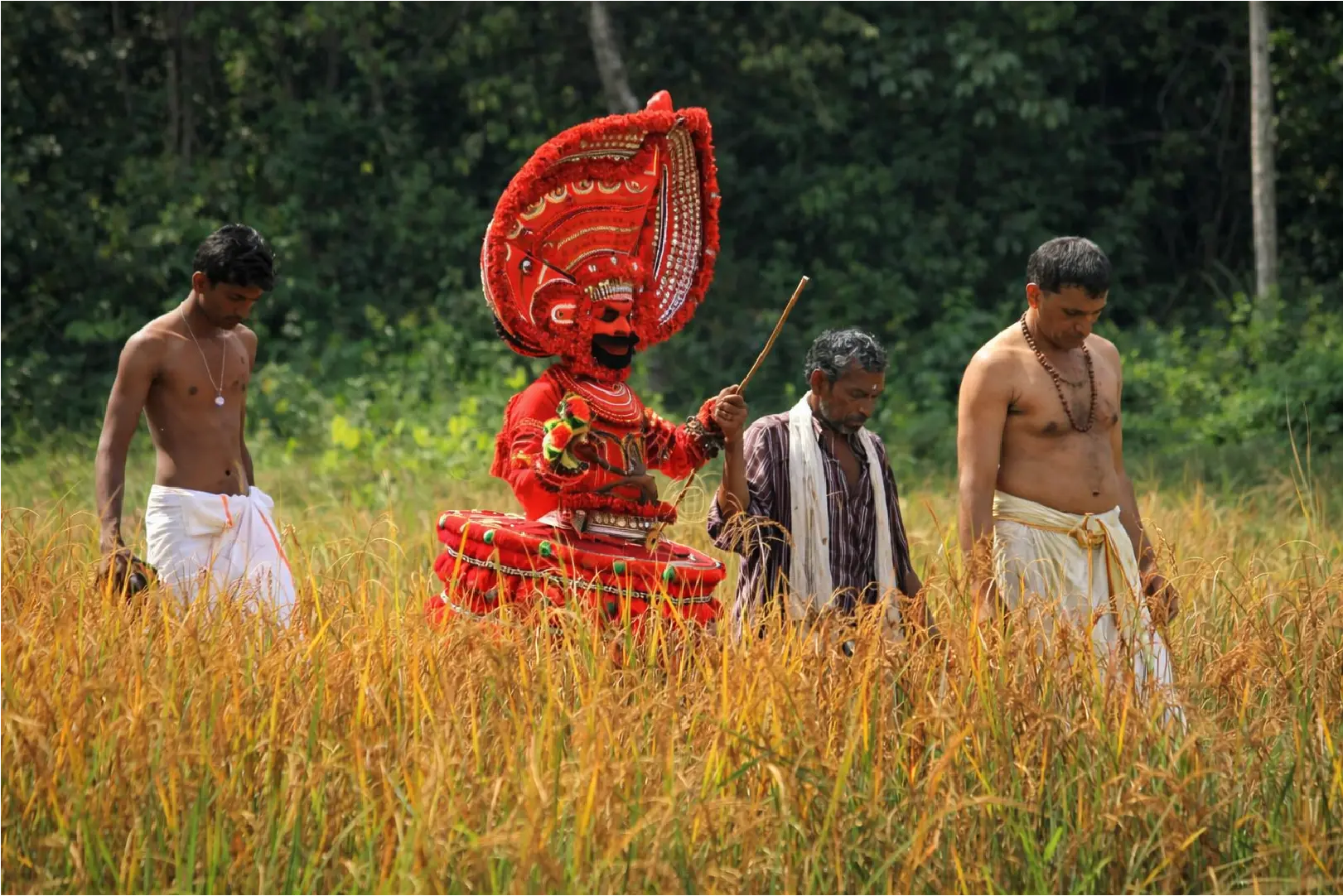

The Festival of Fire is not a single event, nor is it confined to a date on a calendar. It is
a living continuum of ritual performances, seasonal temple festivals, and sacred nights where flame becomes the medium through which stories are remembered, identities are aimed, and communities come together.
In these moments, fire is not spectacle. It is presence.
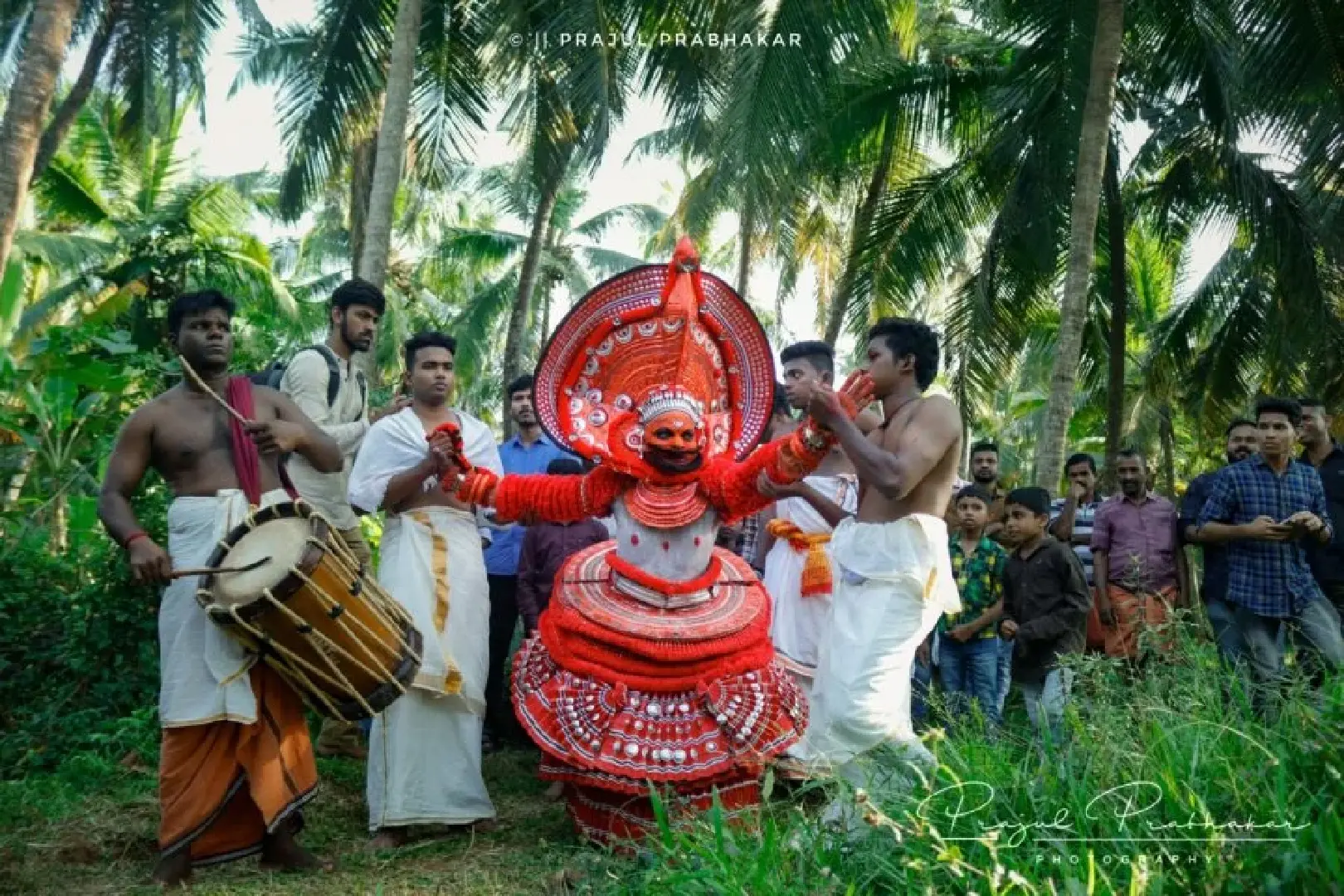
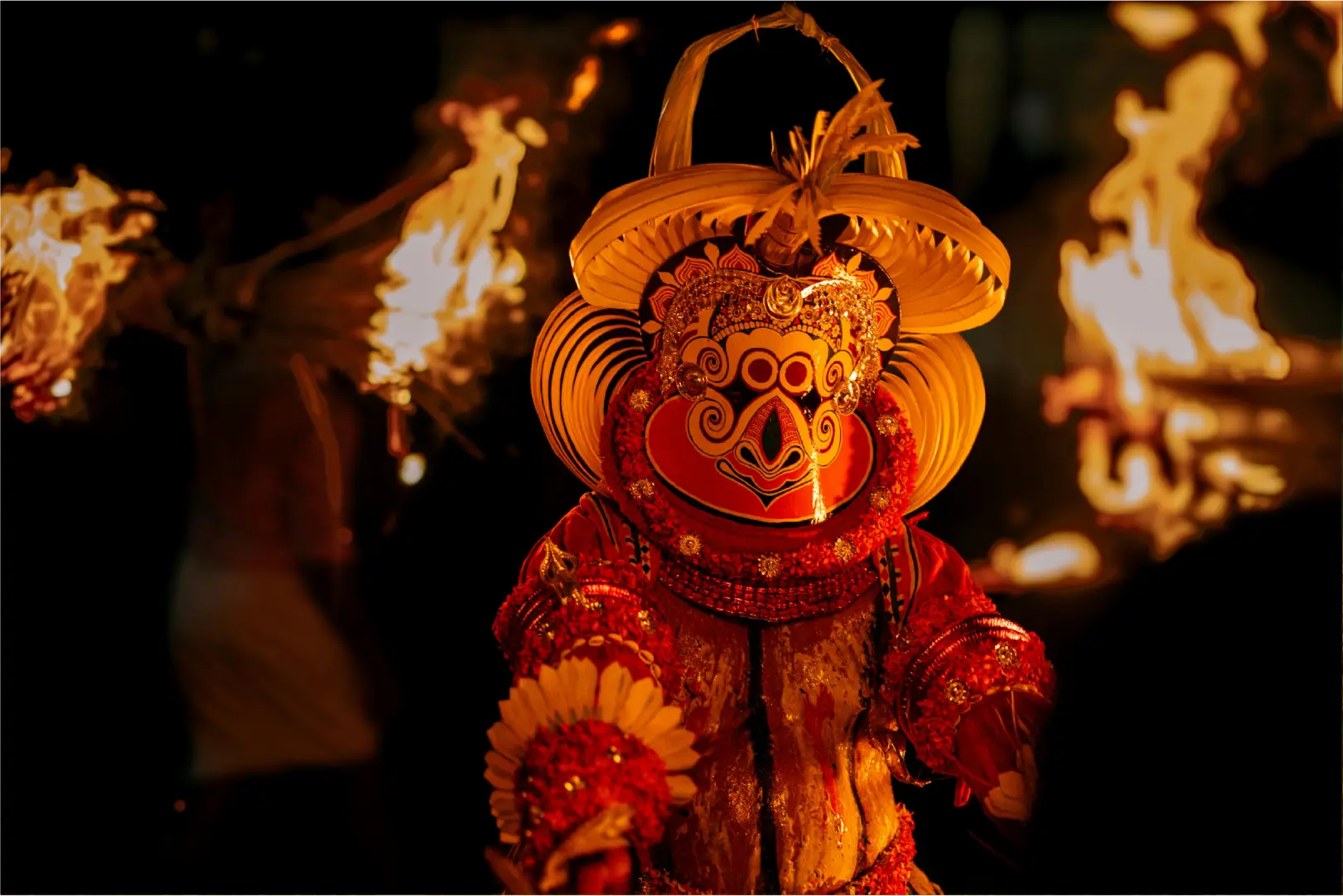
Drums begin softly, almost hesitantly. A slow, measured rhythm gathers momentum as performers step into character—faces painted with intricate pa erns, elaborate
headgear rising like architecture, bodies prepared through hours of ritual discipline. As flames are lit, the atmosphere changes. What was once a village courtyard transforms into a sacred arena.
Fire dances alongside the performer, casting shadows that feel alive. Sparks rise and disappear into the night sky, echoing chants and drumbeats that have been passed down through generations. Every movement has meaning. Every pause holds intention.
These fire rituals—often seen in traditions like Theyyam and other temple performances—are not rehearsed for audiences. They are enacted for the divine, with
the community as witness. The performer does not play a role; they become a vessel, embodying myth, memory, and moral order.
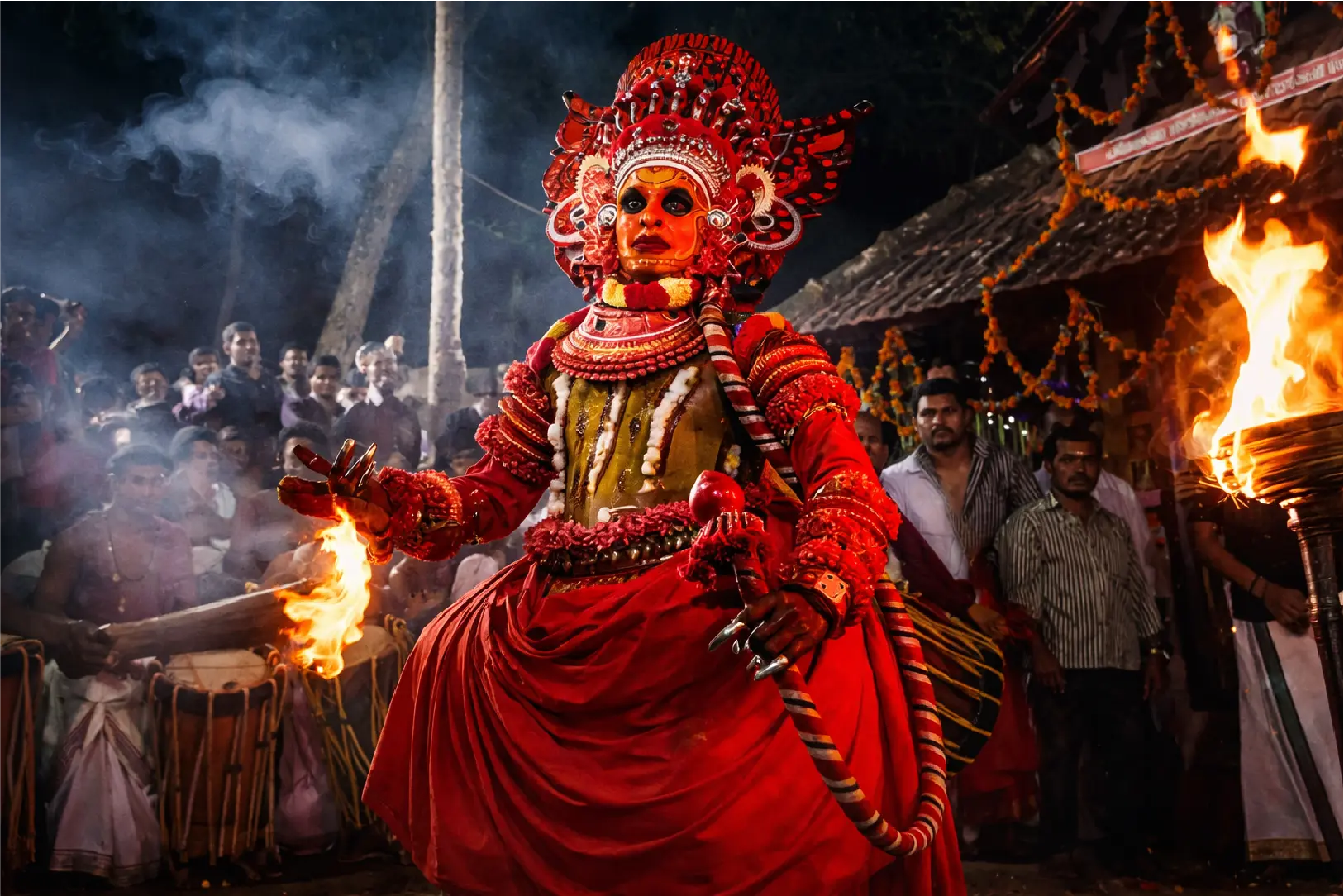
Drums begin softly, almost hesitantly. A slow, measured rhythm gathers momentum as performers step into character—faces painted with intricate patterns, elaborate headgear rising like architecture, bodies prepared through hours of ritual discipline. As flames are lit, the atmosphere changes. What was once a village courtyard transforms into a sacred arena.
Fire dances alongside the performer, casting shadows that feel alive. Sparks rise and disappear into the night sky, echoing chants and drumbeats that have been passed down through generations. Every movement has meaning. Every pause holds intention.
These fire rituals—often seen in traditions like Theyyam and other temple performances—are not rehearsed for audiences. They are enacted for the divine, with the community as witness. The performer does not play a role; they become a vessel, embodying myth, memory, and moral order.
What makes these festivals profound is not just the performance, but the collective participation around it. Families gather after dusk, children perched on shoulders, elders seated quietly at the edges. Food is shared. Conversations pause when the drums rise. Everyone knows when to fall silent.
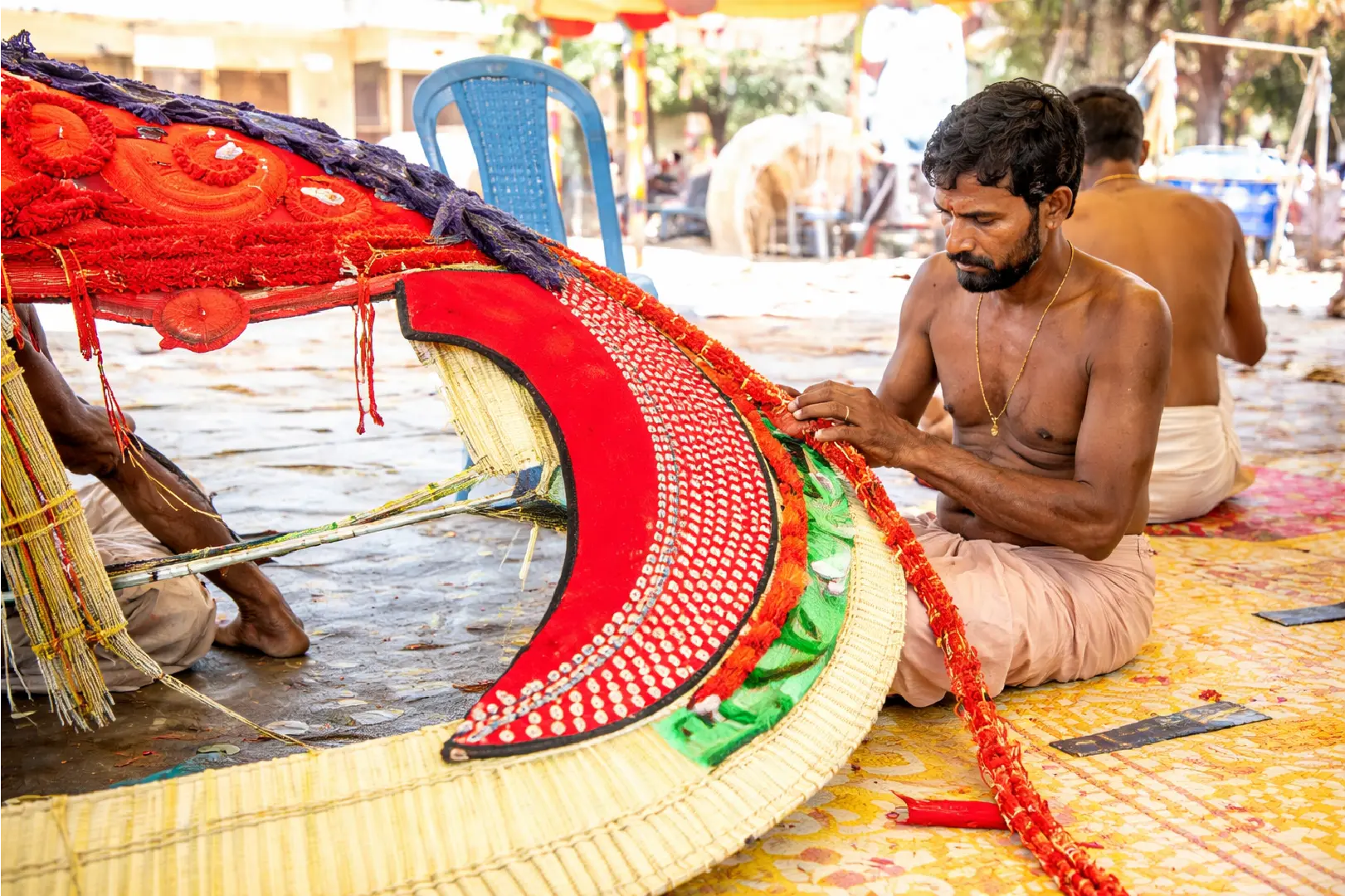
There is no separation between performer and people. The ritual belongs to the community. Each festival is supported by local families, artisans, drummers, costume-makers, and caretakers—many of whom inherit their roles through lineage and lived practice
As the night deepens, the flames eventually subside. The drums quieten. The performer steps out of the ritual, returning to the everyday. Yet something lingers
The Festival of Fire leaves behind more than ash and embers. It leaves a sense of connection—to land, to people, to stories older than time. It reminds us that tradition is not static; it is renewed each time it is honoured
In the glow of firelight, boundaries dissolve. Between past and present. Between sacred and ordinary. Between traveller and place.
And long after the flames fade, the stories continue to burn—quietly, steadily—waiting for the next night they will be told again